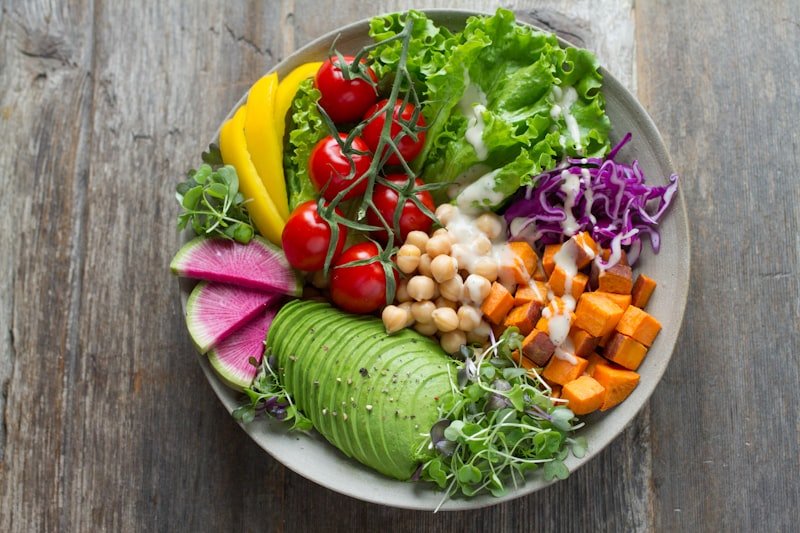

Quick answer: your gut microbiome is the community of microbes living in your digestive tract. What it demonstrably does — ferment dietary fibre into compounds that feed your colon lining and influence metabolism — is well established. What it is claimed to do for skin, mood and energy is far less settled. There is no defined “healthy” microbiome and no useful test for one. Eating a wide range of plants is the best-supported thing you can do, and it costs nothing.
What this guide covers
- What the microbiome actually is
- What it demonstrably does
- What remains genuinely uncertain
- Whether a “healthy” microbiome can be defined
- What actually supports gut health
- When to see a doctor
What your microbiome actually is
Your gut microbiome is the community of bacteria, fungi and viruses living in your digestive tract — trillions of organisms, most of them concentrated in the large intestine [1].
Two things are worth getting straight immediately. It is a resident community, not something you take. And it is not the same as a probiotic supplement, which is a temporary visitor — most strains do not permanently settle, and levels return to baseline within weeks of stopping.
What it demonstrably does Strong
This part is not controversial, and it is the reason gut health is worth caring about at all.
Dietary fibre is a carbohydrate humans cannot digest. It arrives in the colon largely intact, where gut bacteria ferment it into short-chain fatty acids — principally acetate, propionate and butyrate [1].
Those compounds do real work. Butyrate is the preferred energy source for the cells lining your colon, meaning your gut wall is partly fed by your bacteria doing their job. Short-chain fatty acids also act as signalling molecules and are involved in lipid and glucose metabolism, inflammation and immune regulation [1].
This is the mechanism underneath “eat more fibre.” You are not only feeding yourself — you are feeding the organisms that produce compounds your intestinal lining depends on.
What is still genuinely uncertain Limited
Most gut-health content skips this section. It is the most useful one.
The microbiome has been linked in research to mood, skin conditions, immunity, weight and fatigue. Those links are real research directions with plausible mechanisms — but “linked in studies” is doing heavy lifting. Most such findings are associations rather than demonstrated cause, and interventions that reliably improve those outcomes by changing gut bacteria have largely not been established in healthy people.
In irritable bowel syndrome, for instance, altered microbial composition is consistently observed and often tracks with symptom severity — yet whether it causes symptoms, results from them, or both remains unresolved [2].
We cover each commonly-cited symptom with an individual evidence grade in 7 Signs of an Unhealthy Gut. The short version: bloating and altered bowel habits have reasonable support. Fatigue, skin flare-ups and brain fog have considerably less than wellness marketing implies.
Is there such a thing as a “healthy” microbiome?
Not in any way you can currently measure. There is no agreed reference composition, and healthy people differ enormously from one another. Two people in excellent health can have strikingly different gut communities.
This is why direct-to-consumer microbiome tests are hard to act on. They can tell you which organisms are present. They cannot tell you what that means for you, because there is no validated healthy range to compare against.
Greater diversity is generally associated with better health outcomes, and it is the closest thing to a useful marker — but it is a population-level pattern, not a target you can verify you have hit.
What actually supports gut health
Plant variety, first and by some distance. Strong Different fibres feed different organisms, so range matters more than volume of any single food. Vegetables, legumes, whole grains, nuts, seeds and fruit all count. This follows directly from the fermentation mechanism above.
Increase fibre gradually. Strong A sudden increase reliably produces gas and bloating — the exact symptoms people are usually trying to fix. Build up over a few weeks.
Fermented foods. Moderate Yoghurt with live cultures, kefir, sauerkraut, kimchi and miso contain live organisms. They carry no named strains or guaranteed doses, so they cannot be matched to specific research — but they are inexpensive, nutritious and low-risk.
Sleep and stress. Moderate The gut-brain axis runs in both directions, and the evidence that stress affects digestion is stronger than the evidence running the other way.
Probiotics, selectively. Limited for general use Effects are strain-specific rather than species-specific, so “Lactobacillus blend” on a label tells you almost nothing. Evidence is best for specific situations — antibiotic-associated diarrhoea, certain IBS symptoms with named strains — and weakest for general wellbeing in people without a diagnosed condition.
What supplements can and cannot do
No supplement fixes gut health on its own, and any product claiming to cure a digestive condition is making a claim it cannot support.
It is also worth knowing the regulatory position: in the United States, the FDA does not approve dietary supplements before they are sold. Manufacturers are responsible for their own safety and labelling accuracy, which is precisely why independent third-party testing is worth looking for.
The honest sequence is diet first, then a targeted supplement if you have a specific symptom worth targeting — not a supplement instead of the diet.
When to see a doctor
Some symptoms point to a condition needing diagnosis rather than a dietary change. The NIDDK lists several as indicating something other than IBS [3]:
- Blood in your stool, or black, tarry stools
- Unintentional weight loss
- Anaemia
- Difficulty swallowing, or persistent vomiting
- Severe or worsening abdominal pain, or pain that wakes you at night
- A change in bowel habit lasting more than a few weeks, particularly over the age of 50
Do not manage any of these with fibre, fermented foods or probiotics while waiting to see whether they settle.
Common questions
How long does it take to change your microbiome?
Composition responds to dietary change within days, but those shifts are not necessarily lasting. Durable change tracks with sustained eating patterns rather than short interventions — which is why a two-week “gut reset” is not a meaningful concept.
Should I take a probiotic if I have no symptoms?
Evidence for benefit in people without a specific condition is limited. If you have no symptom to target, plant variety and fibre are a better use of the money.
Are microbiome test kits worth it?
Not currently, for most people. Without a validated healthy reference range, the results cannot reliably tell you what to do differently. Tests for specific conditions, ordered by a clinician, are a different and genuinely useful matter.
Does antibiotic use permanently damage the microbiome?
Antibiotics reduce diversity and most people recover substantially over subsequent months, though recovery is not always complete and varies between individuals. This is one situation where specific probiotic strains have better evidence than usual.
The takeaway
- The fibre-to-short-chain-fatty-acid mechanism is well established. Most of the broader “gut affects everything” claims are not.
- There is no defined healthy microbiome and no test that usefully measures one.
- Plant variety is the best-supported intervention, and the cheapest.
- Probiotics are worth considering for specific situations with specific strains — not as a general daily habit.
- The red-flag symptoms above need a doctor, not a dietary change.
Where to go next
- Symptom-by-symptom evidence grades: 7 Signs of an Unhealthy Gut
- Everything else in our Gut Health hub
- How we grade evidence: Research & Methodology
References
- [1] Gut Microbiota and Short Chain Fatty Acids. PMC8835596
- [2] Gut Dysbiosis in Irritable Bowel Syndrome. PMC10609453
- [3] National Institute of Diabetes and Digestive and Kidney Diseases — Symptoms & Causes of Irritable Bowel Syndrome. niddk.nih.gov
- [4] NIH Office of Dietary Supplements — Probiotics Fact Sheet for Health Professionals. ods.od.nih.gov
This article is for educational and informational purposes only and is not medical advice. Digestive symptoms can indicate conditions requiring proper diagnosis — consult a qualified healthcare professional before starting any supplement, and never delay seeking care for the red-flag symptoms listed above. See our Medical Disclaimer and Research & Methodology.