
JOINT HEALTH HUB
Joint Health
Quick answer: the two interventions with the strongest evidence for joint health are movement and weight management. Supplements can help modestly, but none of them rebuilds cartilage, and the evidence behind them varies a great deal. A joint that is suddenly hot, red or severely swollen needs medical assessment rather than a supplement.
What joint health actually means
Joint health is not a single measurement. It describes how well your joints move through their range, how much load they tolerate without pain, and how quickly they settle afterwards. Cartilage, the fluid inside the joint, and the muscles supporting it all contribute, which is why two people of the same age can have very different experiences of the same activity.
Most joint pain is manageable. It is rarely a straight line between the state of a joint on a scan and the amount of pain a person feels, and that gap is the reason movement and load management matter more than most people expect.
What causes joint pain
Joint pain has several common drivers, and they respond to different things. Age-related cartilage change is the most familiar, but load, body weight, inactivity and inflammatory conditions all play a part. The single most useful clue is how long morning stiffness lasts: stiffness that eases within about 30 minutes points one way, while stiffness lasting well beyond that, with symmetrical swelling, points somewhere quite different. Our guide to early signs of arthritis covers that distinction properly, including when it warrants a clinician rather than self-management.
Sleep is an underrated factor. Poor sleep increases pain sensitivity, which can make an unchanged joint feel worse, and pain in turn disrupts sleep. If that cycle sounds familiar, our sleep health guides cover the evidence-based side of it.
What the evidence supports
Below is how the main approaches compare, graded by the strength of the research behind them rather than by how often they are marketed. We use three grades throughout this site — Strong, Moderate and Limited — and we apply them even when the honest answer is unhelpful. For the full picture on managing pain day to day, start with how to reduce joint pain naturally.
| Approach | Evidence | What it realistically does |
|---|---|---|
| Low-impact exercise | Strong | The most consistently supported intervention for joint pain and function. |
| Weight management | Strong | Reduces load through weight-bearing joints; among the best-supported changes available. |
| Collagen peptides | Moderate | Small-to-moderate reductions in pain and improvements in function across randomised trials. |
| Curcumin | Moderate | Beats placebo for knee osteoarthritis pain, but is less effective than ibuprofen. |
| Anti-inflammatory eating | Moderate | A Mediterranean-style pattern has support, with modest clinical significance. |
| Glucosamine & chondroitin | Limited | Genuinely mixed. Large independent trials and smaller studies disagree. |
No approach in this table rebuilds cartilage. Any product claiming otherwise is overstating the evidence.

How to Choose a Joint Supplement: A Label-Reading Guide
A practical guide to reading Supplement Facts labels: what regulation covers, what quality seals verify, and what proprietary blends hide.
Glucosamine vs Curcumin: Which Works Better for Joint Pain?
A side-by-side look at what the clinical trials actually found for glucosamine and curcumin in joint pain, including where major guidelines disagree.
Glucosamine and Chondroitin: An Honest Look at the Evidence
The largest independent trial found no overall benefit while other trials disagree. An honest read of genuinely mixed evidence, and who might still reasonably try it.
Curcumin for Joint Pain: What the Evidence Actually Shows
Curcumin has the strongest trial evidence of any supplement for knee osteoarthritis pain, and still loses to ibuprofen. Effective doses, the absorption problem, and the interactions that matter.

Collagen for Joints: What the Evidence Shows
Collagen peptides have better evidence behind them than most joint supplements, with small-to-moderate benefit across 35 randomised trials. Real doses, realistic timeframes, and what it cannot do.
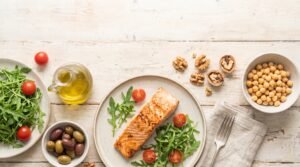
Anti-Inflammatory Eating for Joint Health: What Works
No food cures arthritis. What Mediterranean diet trials actually found, why the advice differs for osteoarthritis and rheumatoid arthritis, and three popular claims that do not hold up.

A Simple Daily Mobility Routine for Stiff Joints
Range-of-motion movement is the one type of exercise generally recommended every day for stiff joints. An eight-minute routine, the four rules that make it work, and how to scale it back on a bad day.

Early Signs of Arthritis You Shouldn’t Ignore
How long morning stiffness lasts is the single most useful early clue, and it separates osteoarthritis from inflammatory arthritis, which needs prompt medical treatment.

Best Low-Impact Exercises for Joint Pain (and How to Start)
Updated: July 29, 2026 · 8 min read · Evidence-based Quick answer: walking, cycling, swimming, water-based classes, and twice-weekly strength

How to Reduce Joint Pain Naturally and Effectively
Updated: July 29, 2026 · 8 min read · Evidence-based Quick answer: the two interventions with the strongest evidence for
Exercise and movement
If you only change one thing, change how much you move. Low-impact activity is the most consistently supported approach for joint pain, and the fear that it “wears joints out” is not supported by the research. The practical question is usually where to start: our guide to low-impact exercises for joint pain covers the options and how to begin from a standing start.
Stiffness is a slightly different problem from pain, and it responds to a different tool. Range-of-motion work is one of the few forms of exercise recommended every day, because there is no muscle damage to recover from. A daily mobility routine for stiff joints is designed to be done before you get out of bed, which is when stiffness is usually at its worst.
Weight management
Weight management sits alongside exercise as a Strong-evidence intervention, because it changes the load travelling through weight-bearing joints with every step. It is also the least comfortable thing to read on a page like this, so it is worth being precise: this is about mechanical load and inflammation, not appearance, and modest changes are meaningful. The practical approaches are covered within reducing joint pain naturally.
Diet and inflammation
Diet is a supporting player rather than a treatment. No food cures arthritis and there is no “arthritis diet”, but a Mediterranean-style pattern has reasonable support, with researchers noting the clinical significance is modest. What that looks like in practice — and the three popular claims that do not hold up — is covered in anti-inflammatory eating for joint health.
Supplements: what the evidence supports
Supplement marketing in this category is aggressive, so it is worth separating the three most common options by evidence rather than by claim.
- Collagen peptides currently have the best-supported case of the three, with small-to-moderate benefits for pain and physical function across randomised trials.
- Curcumin outperforms placebo for knee osteoarthritis pain, but the same body of research shows it is less effective than ibuprofen, and absorption is a real practical problem.
- Glucosamine and chondroitin is the most widely sold and the least clear-cut. The largest independent trial found no significant overall benefit, while other trials disagree.
None of these is a substitute for movement or weight management, and none of them rebuilds cartilage. If you take blood thinners, have diabetes, or are pregnant, speak to a doctor or pharmacist before starting any supplement.
When joint pain needs a doctor
See a doctor if any of the following apply. These patterns can indicate conditions where medical treatment, not self-management, changes the outcome:
- A joint that is suddenly hot, red or severely swollen
- Sudden severe pain, or pain following a significant injury
- Joint pain with fever or feeling generally unwell
- Symmetrical swelling in the small joints of the hands or feet
- Morning stiffness that regularly lasts more than an hour
- Pain that is worsening despite several weeks of sensible self-management
Common questions
Can joint damage be reversed?
No approach on this page rebuilds cartilage. What can improve is pain, stiffness and function, which is what most people actually want to change.
Do joint supplements work?
Some do, modestly. Collagen and curcumin have Moderate evidence; glucosamine and chondroitin is genuinely mixed. All of them are secondary to movement and weight management.
Should I exercise if my joints hurt?
Usually yes, with low-impact activity, though a hot or severely swollen joint is an exception that needs assessment first.
Why do my joints feel worse in the morning?
Joint fluid becomes more viscous during hours of stillness and soft tissue tightens, so the first movements of the day meet the most resistance. How long that stiffness lasts is diagnostically useful.
How long before I notice a difference?
Most approaches take weeks rather than days. Exercise-based changes are commonly reported over 4–12 weeks; supplement trials typically run 8–24 weeks.
